
布袋蓮/Water Hyacinth

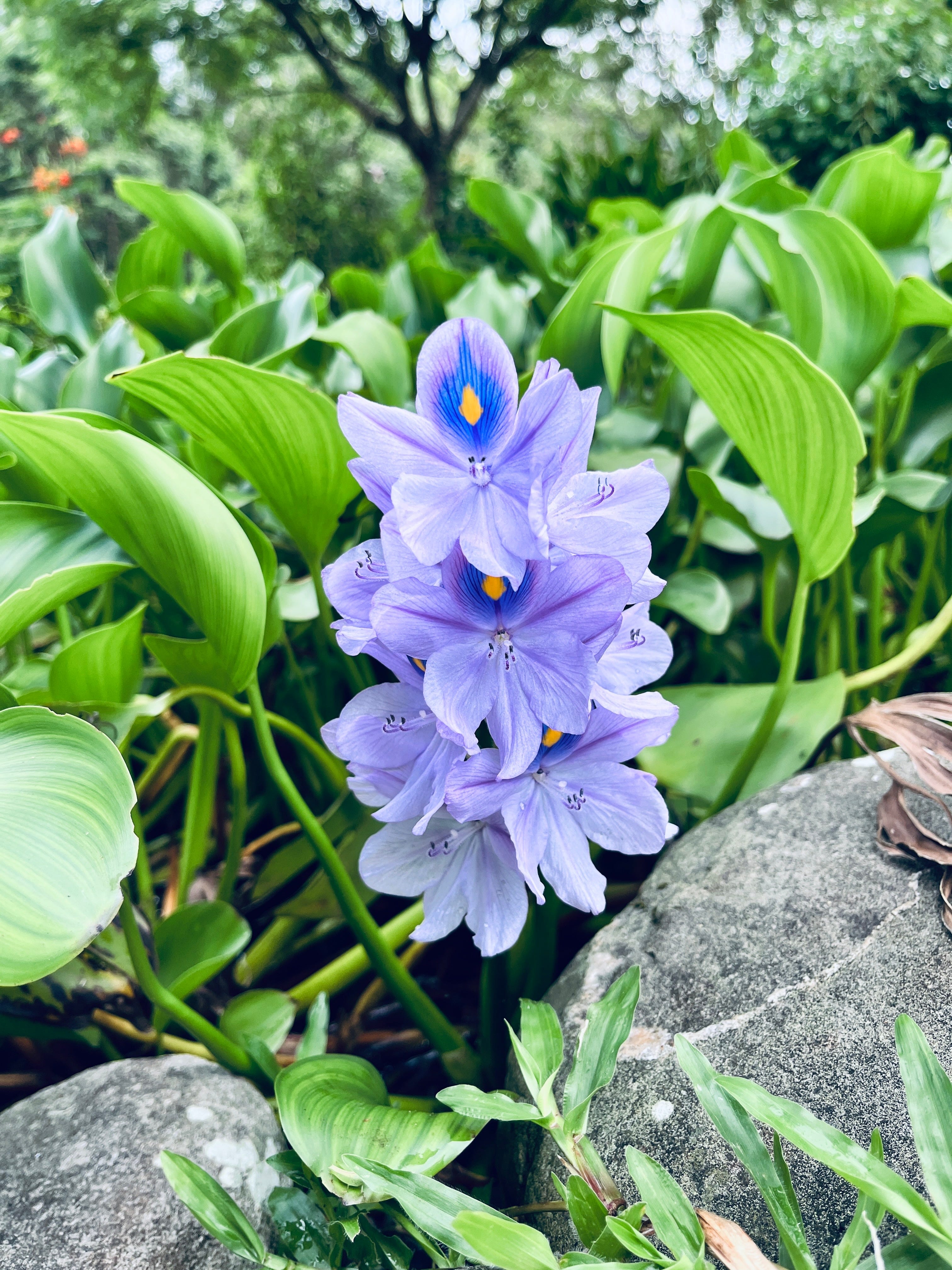
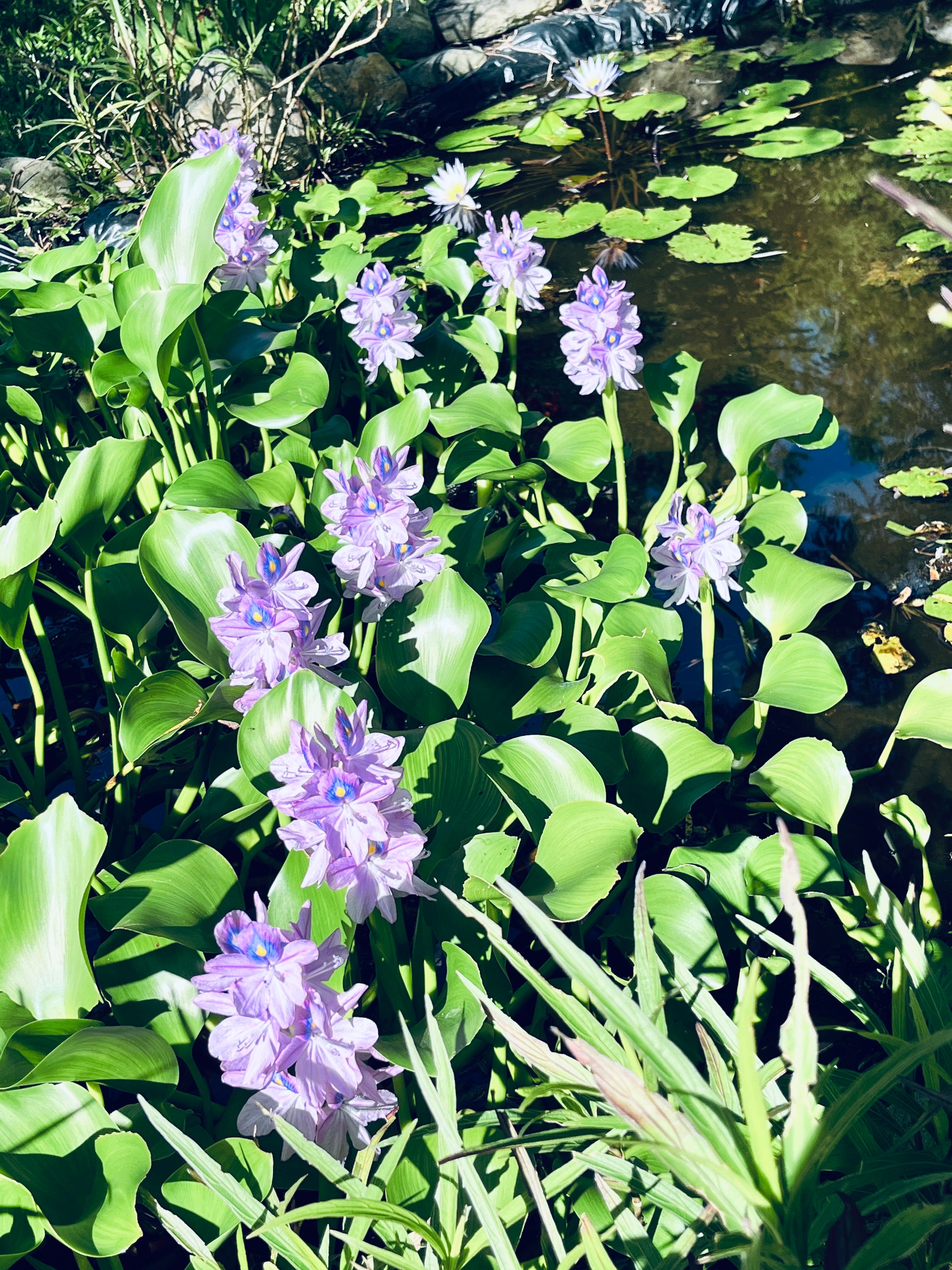
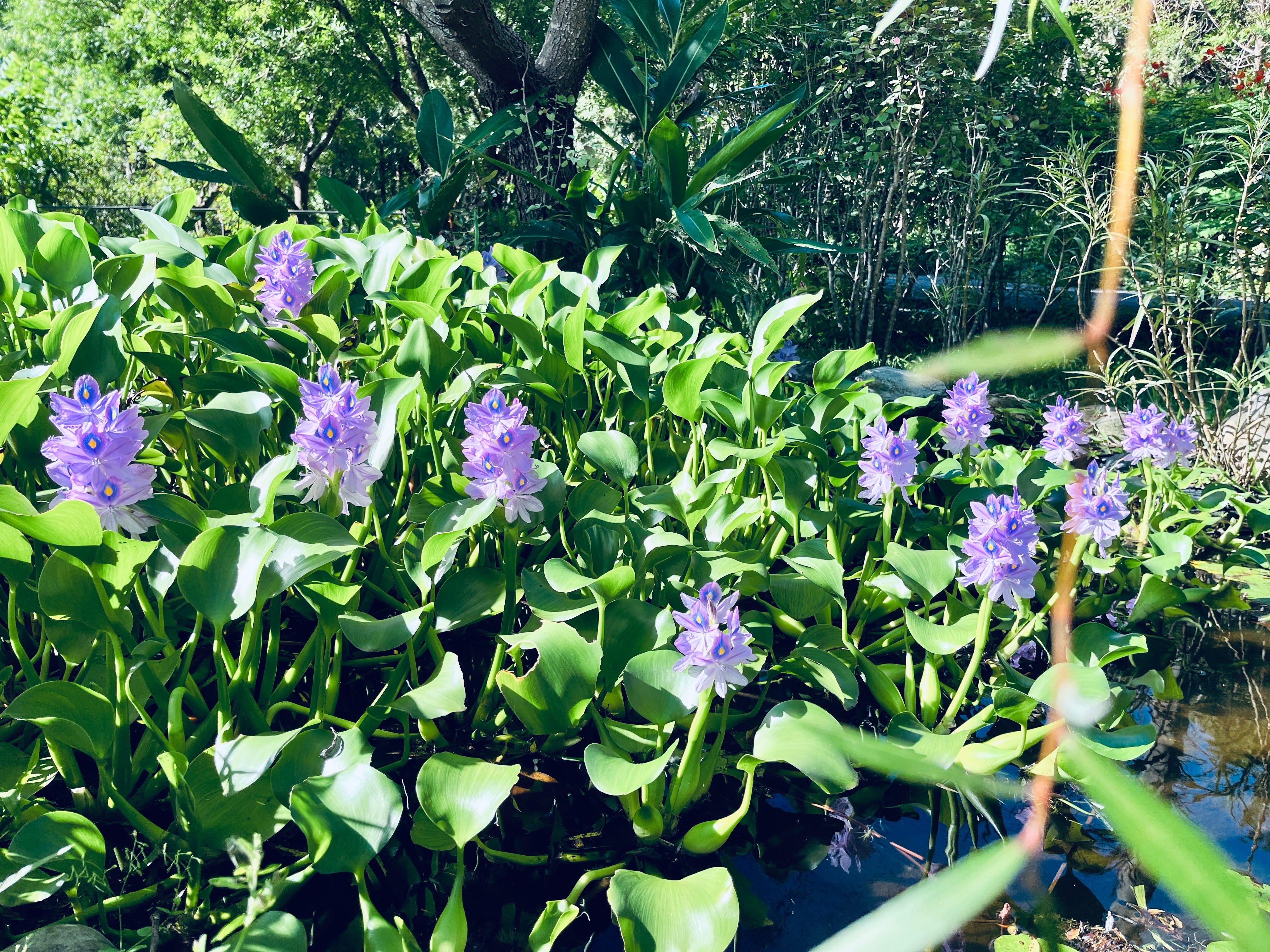
Water Hyacinth / Eichhornia crassipes
Every living thing created by God
has its purpose,
does it not?
⸻
Not long ago, the water hyacinth in the pond opened three or five blooms at a time, sometimes more. After falling silent during a week of extreme heat, this morning I suddenly noticed a single flower spike rising among the leaves. Leaning closer, I saw three or five buds already waiting for their moment to appear.
Once, the water hyacinth was welcomed for its dreamy violet-blue flowers. Once, it was valued as animal feed. Once, it was praised for its ability to clean polluted water. Because of these virtues, it was proudly brought into many foreign lands. Truly, it contributed much to humanity. So why is it now counted among the world’s one hundred most notorious invasive species? Was it invasion? Or was it because humans saw only its usefulness, uprooted it from its homeland, and sent it adrift to places where it did not belong?
Native to the Amazon Basin, the water hyacinth is a floating aquatic plant. Its glossy green leaves stand on the water’s surface, while its extremely fine roots sink deep below. Once introduced to new environments without natural predators, it multiplied rapidly and eventually overran waterways. Its once-admired flowers were forgotten; it came to be called a “weed,” something to be destroyed. A weed? Every living thing created by God has its meaning, doesn’t it? It is only that humans—thinking themselves the “spirit of all creation”—raise themselves above all else and fail to understand the reasons that each life exists.
Its rapid growth can clog rivers and obstruct transport. Its dense mats block sunlight, hindering the life beneath the water. When large amounts die and decay, they consume oxygen and pollute the water, making it unlivable for aquatic plants and animals. All these accusations are placed upon the water hyacinth, yet she does not know how to restrain herself. But it is human self-centeredness that caused this—never taking the time to understand her habits or to make proper use of her ecological role.
When I lived in Thailand, I often saw small boats and long-tail boats clearing water hyacinth from the Chao Phraya River—boat after boat hauling it to shore, where the plants were left to dry in the sun. No one admired the flowers anymore. This method, however, is still acceptable: the dried stems can be used as planting medium, and when fermented, the plant can produce biogas for cooking fuel.
So here, I ask only this:
Do not use herbicides to kill the water hyacinth.For in doing so, you destroy the ecosystem along with it.
______________________________
布袋蓮/Water Hyacinth
⋯⋯⋯⋯⋯⋯⋯⋯⋯
上帝創造的任何生物
都有其美意
不是嗎?
不久前池裡的布袋蓮,總是三五穗或是更多開放。在熱極的一個禮拜沈寂後,今晨驚見一個花穗立於群葉間,蹲身細看,三五花苞已在等待出頭的時刻。
布袋蓮曾因其夢幻般的紫藍花色而成為觀賞植物;曾因其可以作為飼料的用途而受歡迎;曾因其具有防治污水效能而受重視。因著這些優點,她們被光榮地迎到很多陌生的國度。著實,她們為人類做了不少的貢獻,但為什麼如今成為世界百大外來「入侵」物種呢?怎是入侵呢?是人類看上她的好處,才讓她們生生地離開母土,流落他鄉的啊!
原產於亞馬遜河流域的布袋蓮,是一種漂浮的水生植物,葉片翠綠光滑佇立於水面上,極細極細的根則深藏水裡。被恭迎到新的國度以後,因沒有天敵的侵擾,繁殖迅速,終至氾濫,沒有人再憐愛她那夢幻般的花朵,而以「雜草」視之,除之而後快。是雜草嗎?上帝所創造的任何生物都有其美意的,不是嗎?只是自認為「萬物之靈」的人類,自我高舉,沒有去理解萬物存在的道理罷了。
繁殖的迅速會堵塞河道,妨礙水路通行;會阻擋陽光的投射,影響水下生物的生長;大量的死亡株身腐爛後消耗水中的氧,造成水質污染,大量的水中動植物無法生存,嚴重破壞了平衡的生態系統。被這些罪名加諸身上的布袋蓮,不知道如何收斂自己呢!而這一切都是人類的「自我」心態,沒有用心去理解她的習性和好好發揮其生態功能造成的。
居住泰國時,曾多次見到舢舨船或長尾船在我們的母河Chao Phraya River水面上清除布袋蓮,一船一船地送到陸地棄置曝曬,沒有人再讚嘆美麗的花了。這種方式尚可接受,因為曬乾的植物枯身可以當花卉介質使用;而發酵過的布袋蓮變成沼氣,可以作為烹飪的能量。
在這裡,請求人類不要用殺草劑來消滅布袋蓮,這樣就連同生態一起破壞了。
很美的描述,及對大自然的關懷!