
南天竹/Nandina

(Chinese after English)
During the Japanese New Year,
a pot of nandina is placed indoors,
to turn away misfortune from the home.
During Taiwan’s Dragon Boat Festival,
a bunch of mugwort is hung on the doorframe,
to keep evil spirits from entering.
Each tells of the humble wishes
of those who once lived close to the land.
⸻
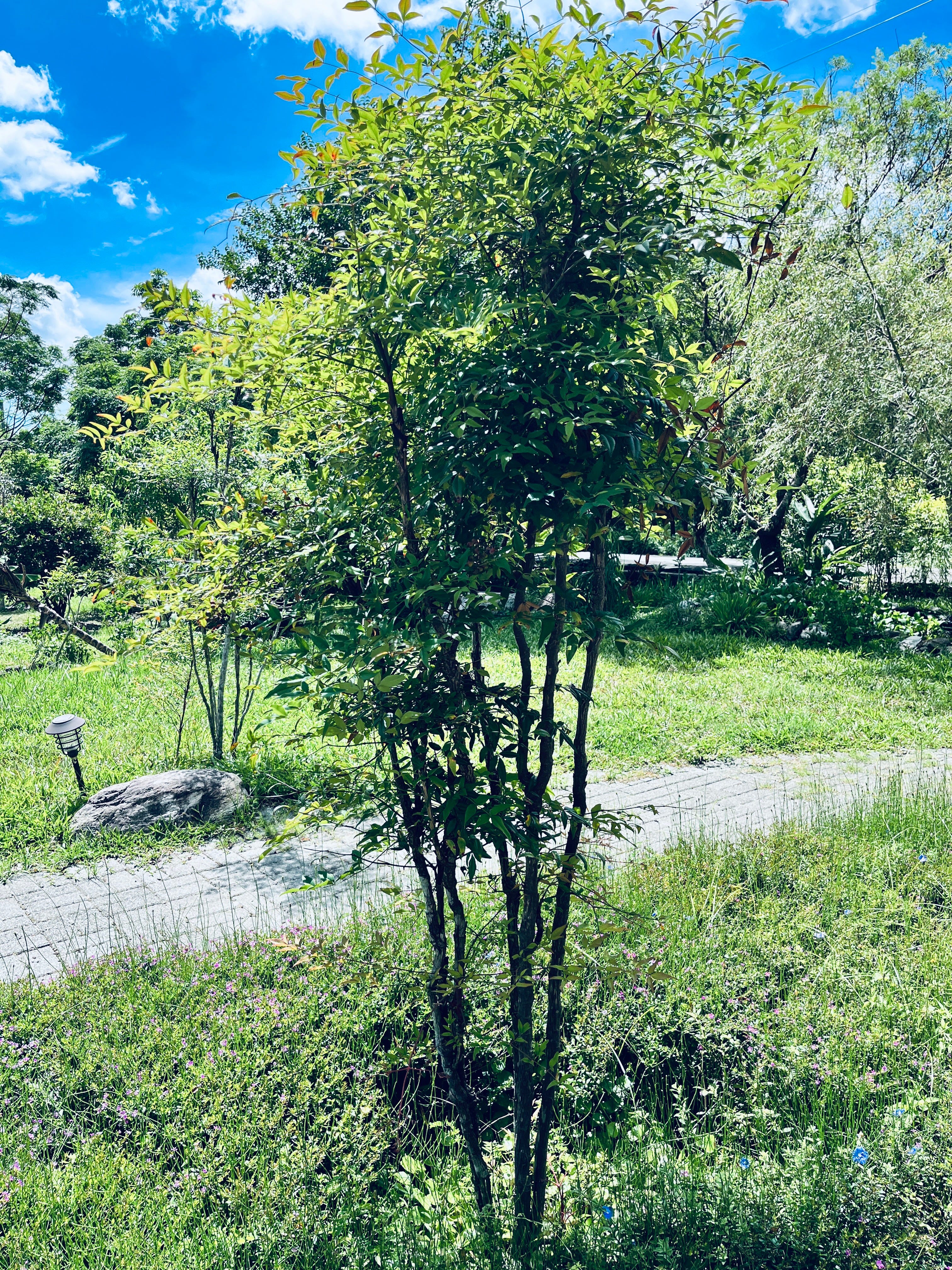
In early spring, tiny pale-yellow flower buds rise upward in tiered clusters, forming slender towers—one, then two, then several gathered upon the branches. The plant, much beloved in Japan, is called nanten (南天ナンテン). Because its segmented stalks grow upright, always straight and bamboo-like, the Chinese call it nantianzhu, literally “Southern Heaven Bamboo.” With its elegant posture and dense foliage, it has long been a favorite in gardens and courtyards.
During my travels in Japan, I’ve seen nanten everywhere—parks, temples, and private homes. Even the smallest courtyards often hold a single clump. Beyond its beauty, it is also part of New Year tradition: placing a branch or a potted plant indoors is believed to bring good fortune. The reason lies in its name—nanten sounds identical to the Japanese phrase nan o tenzuru (難を転ずる), meaning “to turn away misfortune” or “to shift difficulties elsewhere.” One can’t help but wonder, though—where do those difficulties go? To whose home are they sent?
This custom is not so different from Taiwan’s Dragon Boat Festival practice of hanging mugwortand sweet flag on doorways to ward off evil. Both reflect the quiet hopes of people in an agrarian world—humble wishes for peace, safety, and a little protection from what cannot be controlled. For many years, I lived across from Japanese friends who loved their nanten dearly and shared that affection with us. Yet somehow, their misfortunes never seemed to find their way to any doors. But there is an enduring friendship.
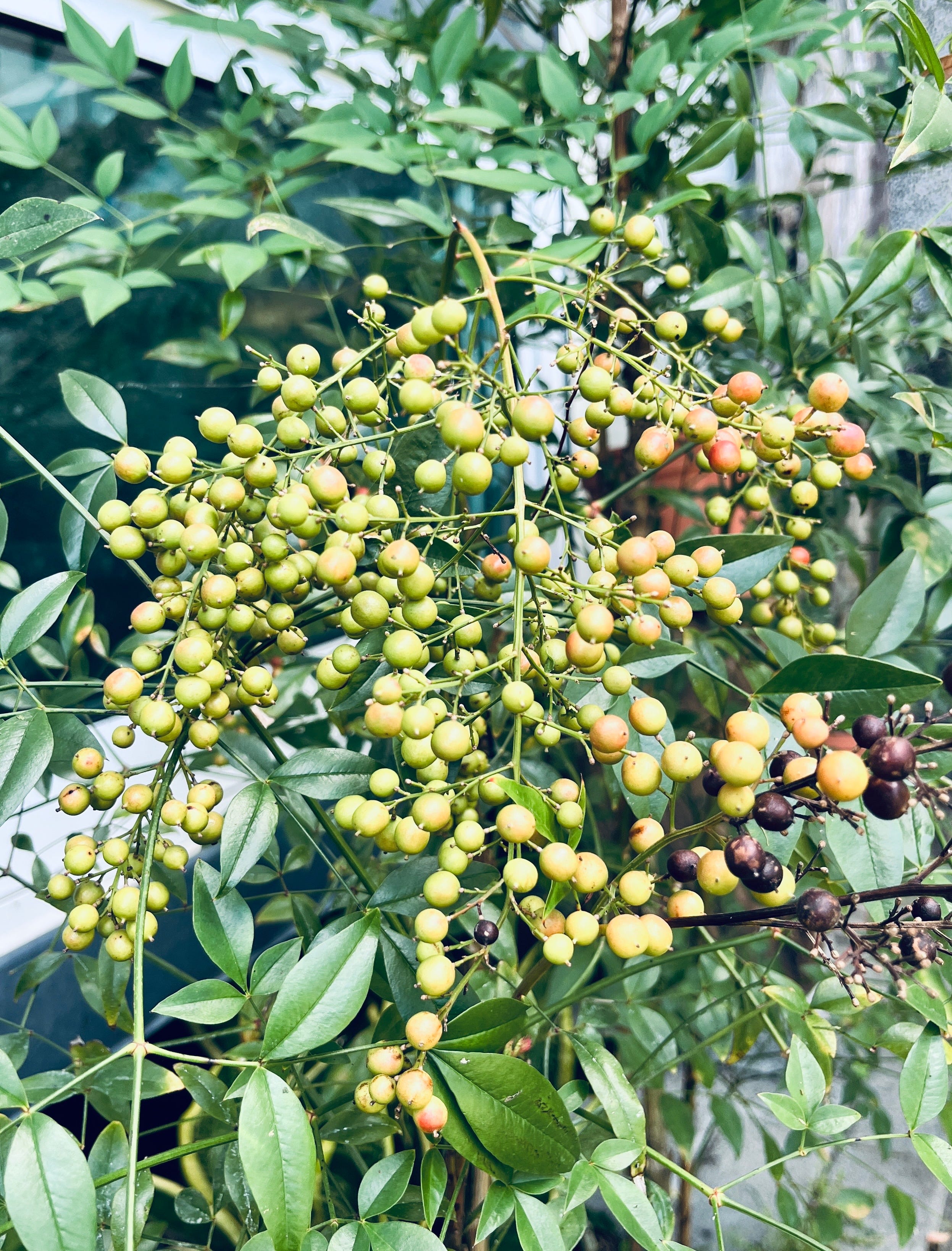
From late autumn into the following spring, nanten takes on another face entirely. The new leaves no longer shimmer with tender green but deepen into a tapestry of reds—crimson, amber, and rust—dancing together beneath the same sky, in the same wind. By midsummer, the blossoms have all fallen; what remains are clusters of pale green fruit, waiting patiently for the slow turn of the seasons. When autumn arrives, the berries blaze into brilliant red, telling, in quiet radiance, the whole story of the nanten’s year—itsturning of hardship into grace.
⸻
日本的新年節期
屋內插一盆南天
讓難題轉出家門
台灣的端午節期
門楹懸一把艾草
以避邪氣進家門
訴說著農業社會住民的卑微願望
初春時分,細細微黃的花苞以塔形步步高昇而長,然後一座塔兩座塔⋯⋯好幾座塔在枝頭叢聚。這種深為日本人喜愛的植物,日本人叫她「南天ナンテン」,由於枝幹一節一節往上長,永遠挺直近似竹子,因此漢語稱其為「南天竹」。因其優美的姿態和茂密的基因,成為園藝界的寵兒。
幾度漫遊日本,不管是公園、寺廟、人家,都可見到「南天」,即便在小小的院落中也會見到一叢 。除了美化庭園外,新年期間在家裡擺放一株或插上一支南天,已成為日本人的習俗。因南天的日語發音與「難轉」完全一樣,代表著把困難的事情都轉走了。不知要轉到哪家呢?這樣的習俗跟台灣端午節插在門上的艾草、菖蒲等避邪,都訴說著農業社會住民的卑微願望。曾跟日本好友對門而居多年,他們把對南天的喜愛分享給我們,但困難的事情卻從來沒有轉到哪一家來呢;有的卻是恆久的友情。
深秋至隔年的春,你見到的南天是另一種風情。這段時間新長的葉子不再是嫩綠,而是不同層次的紅共享一片天一陣風。進入盛夏花就盡落,枝頭承載著是串串草綠色的果實,她們在等待秋的到來,那時豔紅的果實將告訴你她一生的故事。
A beautiful plant! Here in the US common name is Heavenly Bamboo. It was nice to hear of the spiritual use of the plant in Asia.