
七里香/Common Orange Jasmine

七里香/Common Orange Jasmine
───────────────
路過的行人
總會
駐足驚詫歡笑地讚賞著
月橘也頷首回以輕笑
在微風中
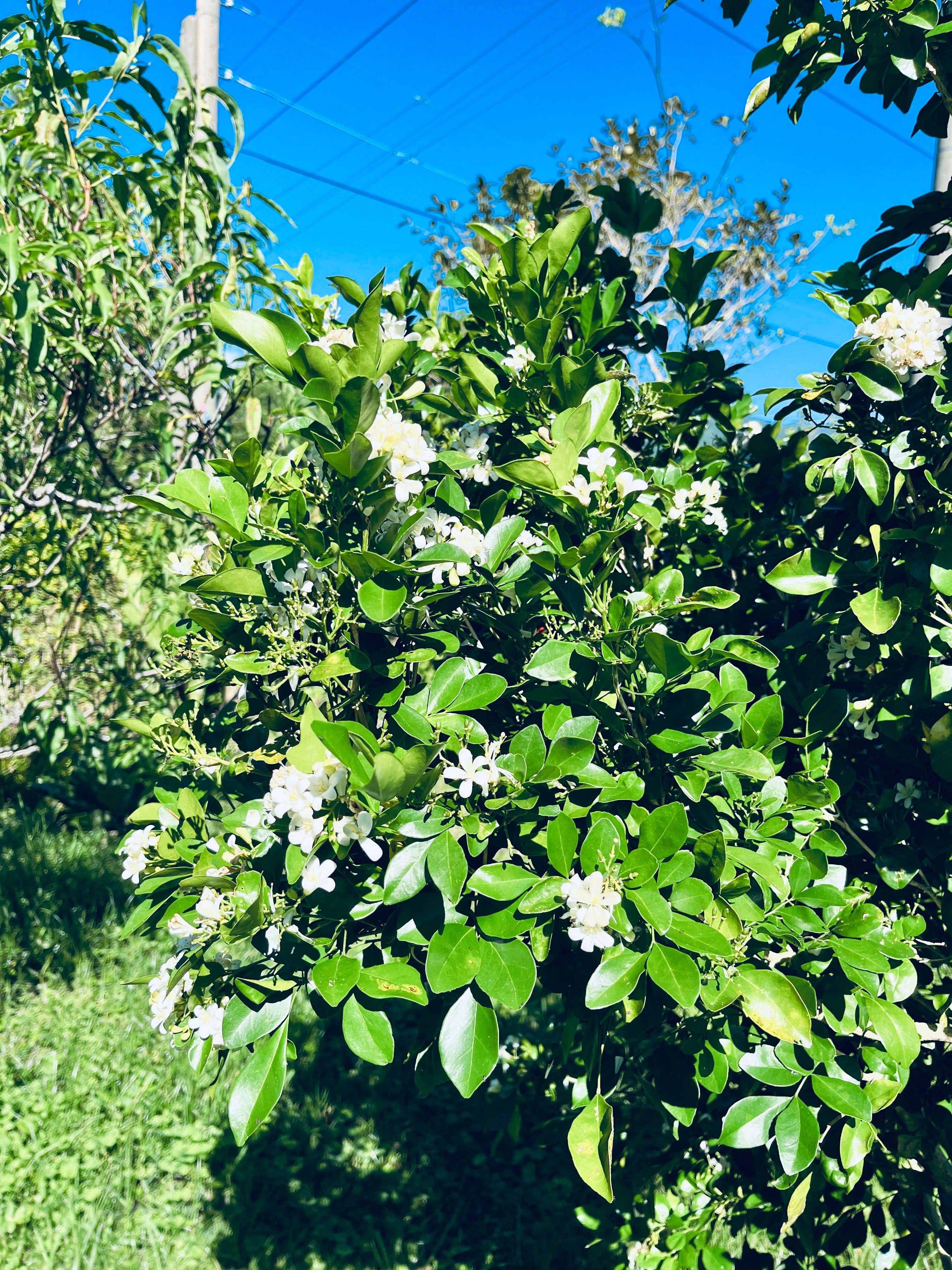
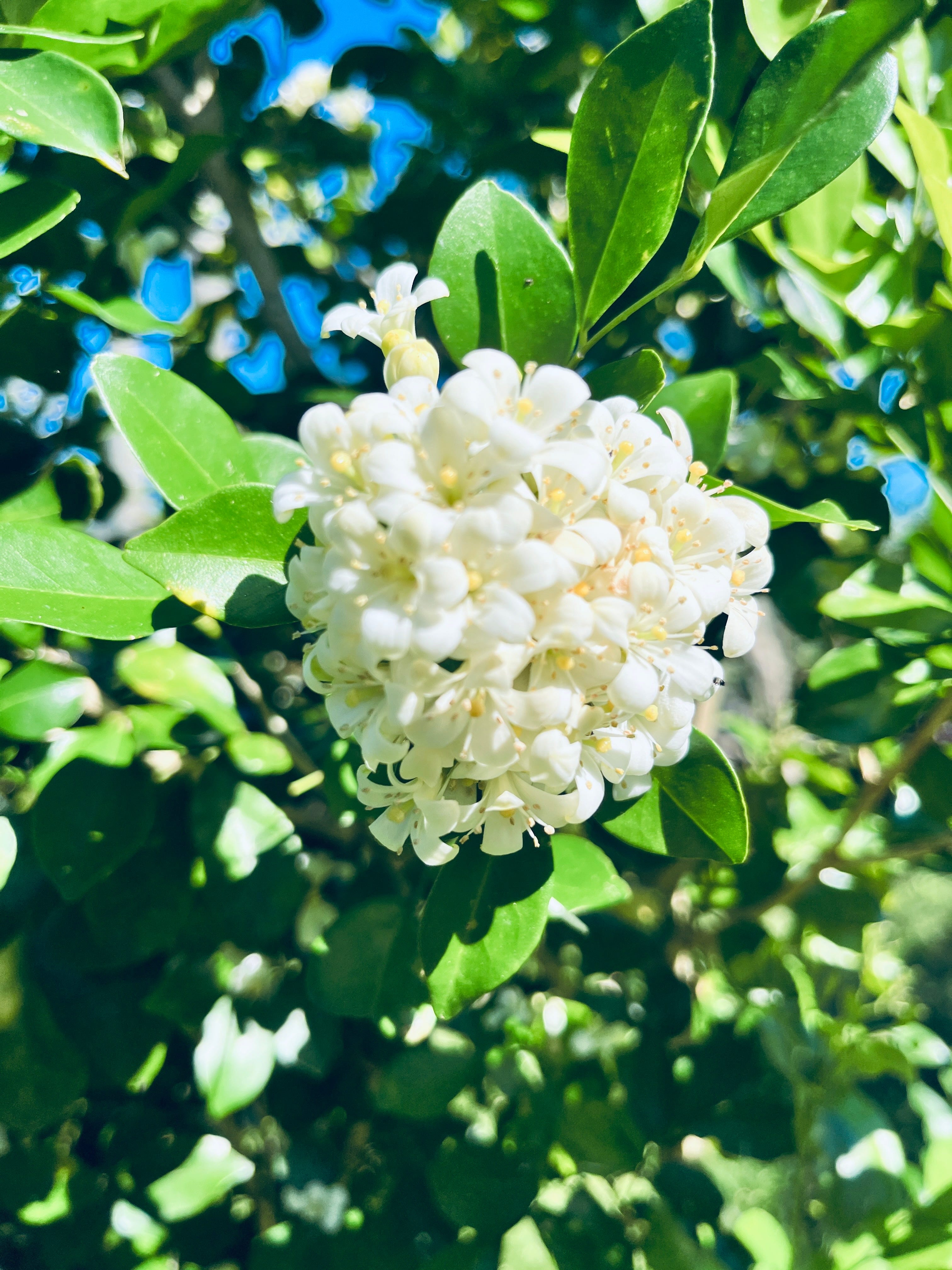
不經意間,籬中成簇成簇的月橘又歡樂綻放了。全年均可開花的月橘,亮白的簇狀花群叢聚於分枝的頂端,盛開時滿園撲鼻香,因其香味可傳至遠方,誇張的稱其為「千里香」;保守的就稱其為「七里香」。不管怎麼稱呼,開花時「花香滿室滿園」絕對是不誇張也不保守的。
花謝後,再努力蓄積開花的能量,常不預告不張揚也不喧囂又再度成群來訪,路過的行人總會駐足驚詫歡笑地讚賞著,月橘也頷首回以輕笑,在微風中。花謝成果,由綠逐日轉成欲滴的紅,多汁的果肉吸引鳥們來啄食。鳥在吸收果實的營養之餘,把無法吸收消化的種子隨飛隨撒,新的生命帶著母親的祝福定居他鄉,散居四處的生命繼續繁衍。這種生物共生的法則在互惠中循環,獲致生態的平衡。
鳥們在獲得七里香的贈禮後,不忘回報。
走訪傳說中的七里香原始林步道的那天,整個部落是在卡拉OK的歡唱聲中的。原來部落有一位長輩生日,在村長Izan的規劃下,年輕族人合力捕了一隻山豬回來慶賀同樂,我們也被熱情邀宴,但因事先沒有規劃時間而婉拒。
這條蜿蜒而上又蜿蜒而下的自然步道,石階梯旁有安全護繩,兩側的七里香雜錯長在其他樹種間。樹幹精瘦而堅韌的七里香,隨著天候和自然環境,或扭曲或彎腰或昂首,這「天雕」之美,變化之多,只能用「嘆為觀止」來形容。從其蒼勁的樹身來看,應已是「樹瑞」了。
離開充滿歡樂聲的部落時,在路邊又遇到Izan村長,就下車打招呼和感謝。熱心的Izan又補充了一些這條自然步道的過去和現在。
十年前發現這片依地形生長的七里香樹林時,Izan驚呆了。回過魂後,覺得應該讓族人及鄉長知道。就這樣,公部門編列預算,修築步道,清查樹口,還很慎重地編門號,一戶一樹。Izan說當初有500多棵,超過百歲的大約300棵。此外,地方也自組巡守隊守護著。這樣的努力合作是為了保護這天然資源,推薦地方的觀光亮點。
十年後,門號不見了,Izan啊!你在搖頭說「樹口也減了一半」時,是否有「悔不當初」的慨嘆呢?
⋯⋯⋯⋯⋯⋯⋯⋯⋯⋯⋯
Common Orange Jasmine / Seven-League Fragrance
⸻────────────
Passing travelers
always stop—
startled, delighted, smiling in praise.
The orange jasmine
bows gently in return,
smiling lightly
in the breeze.
Without notice, clusters of orange jasmine within the hedge have once again burst into joyful bloom. The Murraya paniculata flowers all year round; its bright white blossoms gather in clusters at the tips of branches, filling the entire garden with their rich fragrance when in full bloom. Because the scent travels far, some exaggerate and call it “Fragrance of a Thousand Miles,” while the more modest call it “Seven-League Fragrance.” Whatever the name, when it blooms, the saying “its fragrance fills every room and garden” is neither an exaggeration nor an understatement.
After the blossoms fade, the plant quietly gathers strength for the next flowering—without warning, without fanfare, it blooms again, freely and abundantly. Passersby always pause, surprised and delighted, smiling in praise; the orange jasmine bows in return, smiling lightly in the breeze. When the flowers are gone, small fruits appear, ripening gradually from green to a deep, dewy red. Their juicy flesh attracts birds, who come to feed. As they absorb the fruit’s nourishment, they also carry its undigested seeds through the air, scattering them as they fly. New life, bearing the mother tree’s blessing, takes root in distant soil. This cycle of symbiosis—giving and receiving—sustains the balance of the ecosystem.
The birds, after receiving the orange jasmine’s gift, do not forget to return the favor.
When I visited the legendary Seven-League Fragrance Forest Trail, the entire tribe was alive with karaoke songs. It turned out that one of the elders was celebrating a birthday, and under the planning of Village Head Izan, the younger members of the tribe had hunted a wild boar for a communal feast. We were warmly invited to join but had to decline due to prior plans.
The natural trail winds gently upward and downward. Rope handrails line the stone steps, while the orange jasmine trees grow intermixed with other species along both sides. Their trunks are slender yet resilient—some twisted, some bent, some standing tall—each shaped by weather and terrain. The sculptural beauty of these “heaven-carved” forms, so varied and alive, could only be described as breathtaking. Judging by their thick, gnarled trunks, many of them were surely “tree elders.”
As we left the cheerful sounds of the tribe behind, we met Village Head Izan again by the roadside and stopped to greet him. Enthusiastic as always, he shared more about the past and present of this natural trail.
Ten years ago, when Izan first discovered this grove of orange jasmine trees growing along the contours of the land, he was astonished. After recovering from his surprise, he felt that both the tribespeople and the township mayor should know about it. Soon after, government funding was allocated to build the trail, register each tree, and carefully assign every one a number—one tree per plaque. Izan said there had been more than five hundred trees then, about three hundred of them over a century old. The local community also formed a volunteer patrol to protect them. This joint effort was meant to safeguard the natural resource and promote the area as a local attraction.
Ten years later, the numbered plaques are gone. Izan, you shake your head and say, “Half the trees are gone as well.” When you say that, is there not a faint sigh of if only we had known?
Moon, your writing is beautiful. It so conveys your appreciation of nature, the beauty and gift of plants, freely given. The poem is the essence of the Orange Jasmine in words. Thank you.